
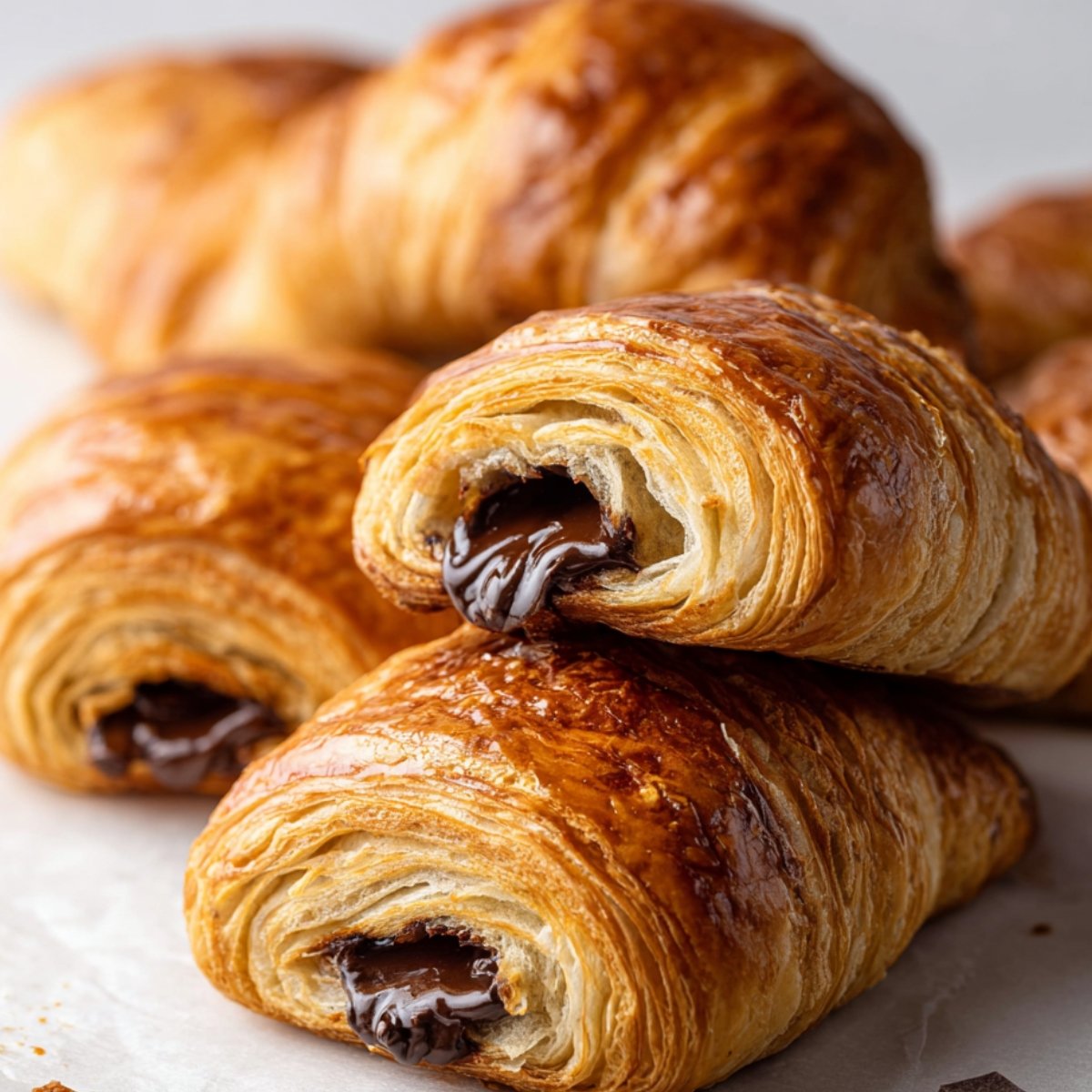
These Homemade Chocolate Croissants are flaky, buttery, and filled with rich dark chocolate that melts into every layer. Golden on the outside, tender on the inside, with that signature shatter when you tear one open. I made my first batch on a rainy Sunday morning a few years back, and the smell alone was worth the effort. Yes, they take some time, but the process is easier than you'd think, and the results are bakery-quality gorgeous.
If you love impressive breakfast treats, you'll also want to try my baked ham and cheese croissants or these simple Apple Fritter Bites.
Why You'll Love This Homemade Chocolate Croissants
These baking French pastries at home might sound like a big project, but the process is surprisingly forgiving. Yes, it takes a few hours from start to finish, but most of that time is hands-off. The dough rests in the fridge while you go about your day, and the proofing happens on its own while you relax.
The croissant dough recipe uses simple ingredients: flour, butter, milk, yeast, and a little sugar. The croissant butter layer is just butter mixed with a bit of flour to keep it pliable. And the technique, once you get the hang of it, becomes second nature. Roll, fold, chill, repeat. It's meditative, almost.
Jump to:
Homemade Chocolate Croissants INGREDIANTS
Here's everything that goes into these flaky, buttery pastries.
See Recipe Card Below This Post For Ingredient Quantities
For Croissant Dough:
- Water: Hydrates the flour and helps activate the yeast. Use lukewarm water for the best rise.
- Whole milk: Adds richness and helps create a tender crumb. Whole milk works better than skim because of the fat content.
- Granulated sugar: Feeds the yeast and adds a touch of sweetness to balance the butter.
- Instant yeast: Helps the dough rise without needing to be activated first. It's faster and more reliable than active dry yeast.
- Bread flour: Creates the structure and chewiness that makes Homemade Chocolate Croissants flaky and tender. The higher protein content helps the dough hold all those buttery layers.
- Fine sea salt: Enhances the flavor and balances the sweetness.
- Unsalted European-style butter: Has a higher fat content than regular butter, which creates those beautiful, buttery layers. Make sure it's softened and cubed so it mixes evenly into the dough.
For Croissant Butter:
- Unsalted European-style butter: This is the butter you fold into the dough to create the layers. It needs to be softened and pliable so it spreads evenly without breaking through the dough.
- All-purpose flour: Mixed into the butter to keep it from getting too soft or greasy. It helps the butter stay firm and easy to work with during the Homemade Chocolate Croissants folding technique.
For Assembly:
- Egg yolk: Mixed with cream to create an egg wash that gives the Homemade Chocolate Croissants a gorgeous golden color and a slight shine.
- Heavy cream: Thinned with the egg yolk to make the wash brush on smoothly.
- Chocolate batons: These are sticks of dark chocolate made specifically for Homemade Chocolate Croissants. You can also cut a bittersweet baking bar into ½-inch sticks. They melt just enough to stay creamy inside the pastry.
How to Make Homemade Chocolate Croissants
Here's how to turn simple ingredients into bakery-style Homemade Chocolate Croissants.
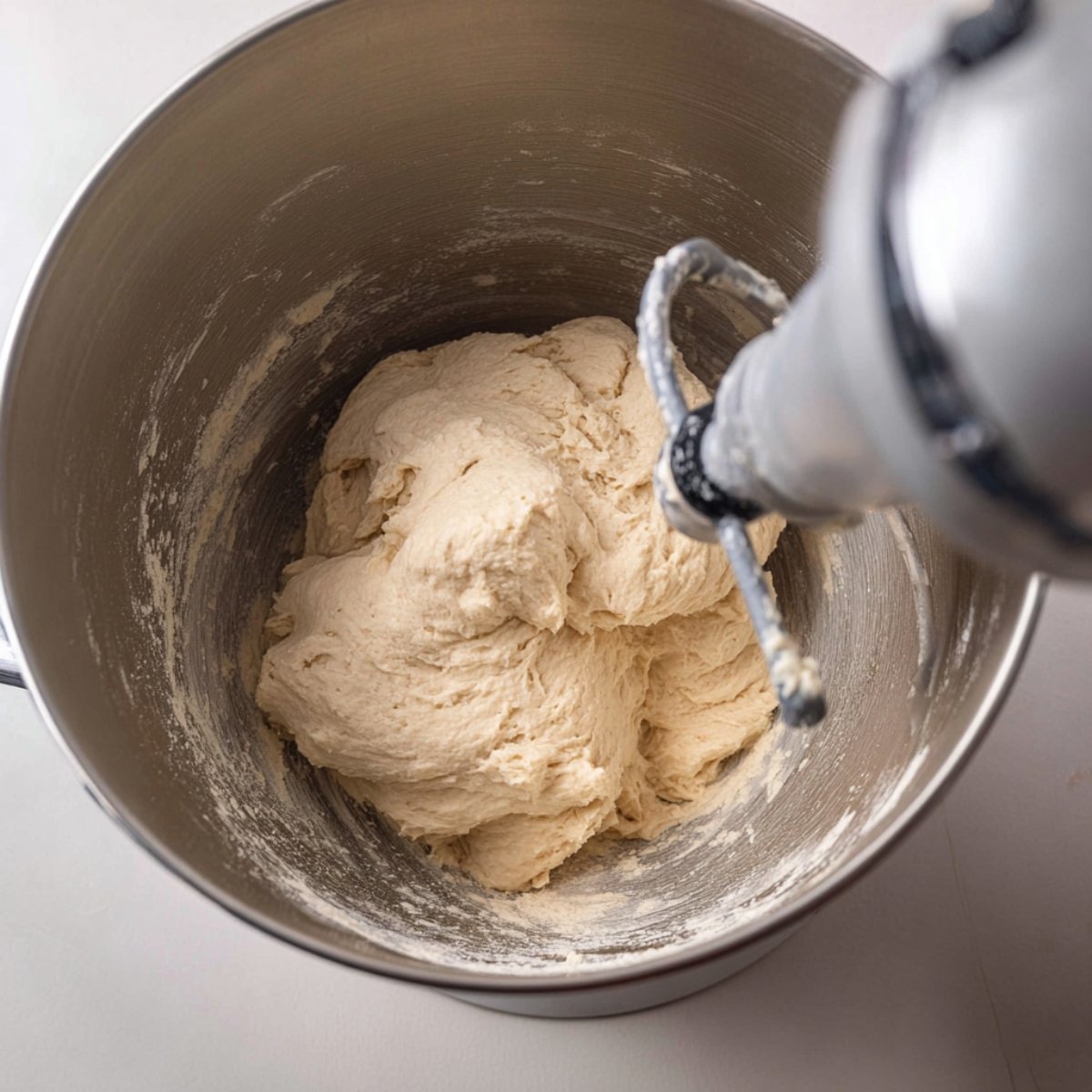
- Mix the dough: In a stand mixer fitted with the dough hook, combine the water, milk, sugar, instant yeast, bread flour, salt, and softened butter cubes. Mix on low speed for about 5 minutes until the dough comes together and pulls away from the sides of the bowl.
- Knead briefly: Turn the dough out onto a work surface and knead by hand for about 1 minute to make sure the butter is fully incorporated. The dough doesn't need to be perfectly smooth.
- First rise: Place the dough in a covered bowl and let it rise for 1 to 2 hours until it doubles in size and looks puffy.
- Chill the dough: Once risen, remove the dough from the bowl, flatten it gently, and wrap it in plastic wrap. Pop it in the freezer for 15 minutes to firm up.
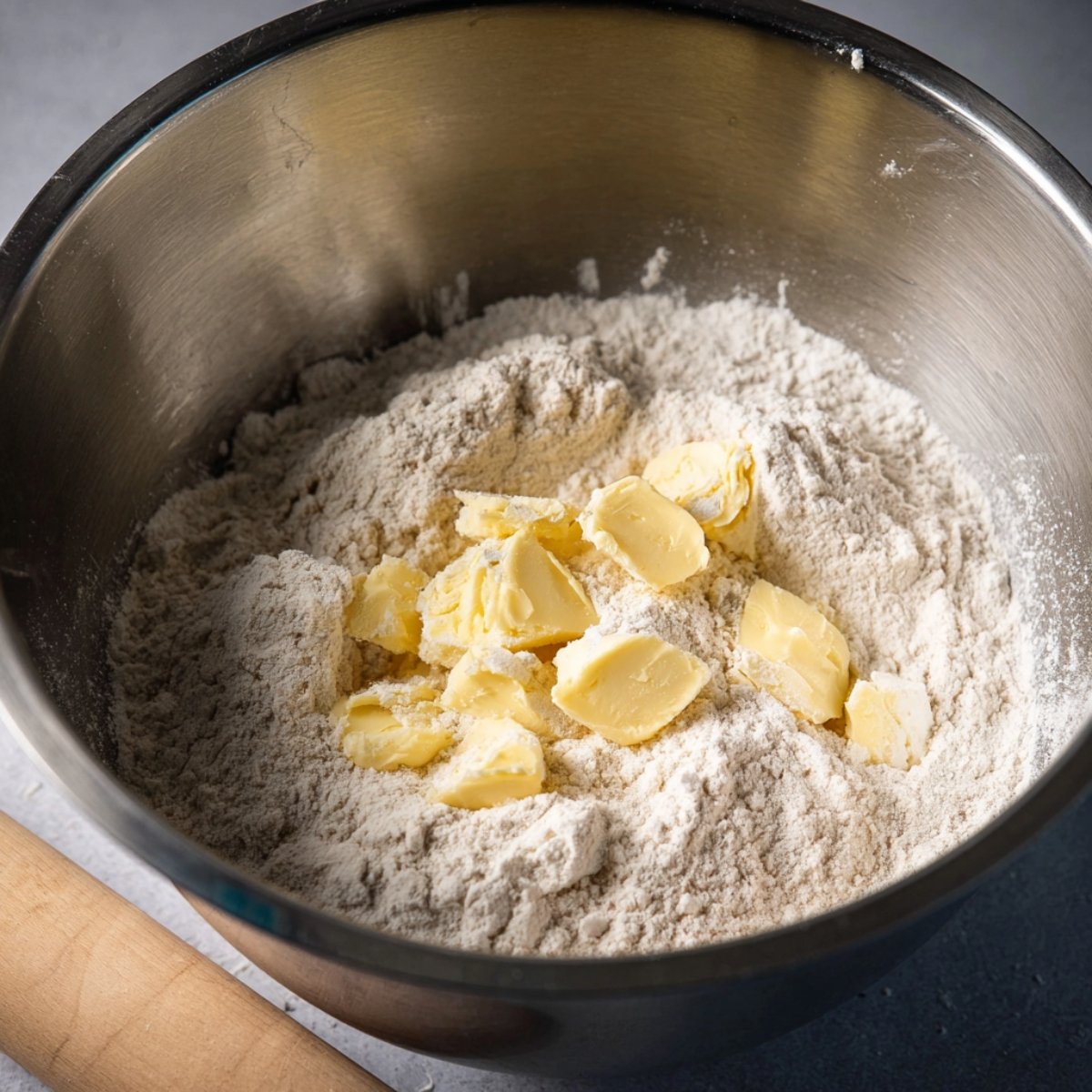
- Mix the butter: In a stand mixer fitted with the paddle attachment, add the softened butter and sprinkle the flour over it. Mix on low until combined, then scrape down the sides and mix for another 30 seconds until the mixture is smooth and spreadable.
- Roll out the dough: On a lightly floured surface, roll the chilled dough into a 10x20-inch rectangle. Brush off any excess flour so it doesn't interfere with the layers.
- Spread the butter: Spread the prepared butter mixture over the bottom ¾ of the dough, leaving the top ¼ clean.
- Fold the dough: Fold the top ¼ of the dough down over the butter, then fold it again. Rotate the dough 90 degrees so the seam is on the side.
- Roll and fold: Roll the dough out to an 8x20-inch rectangle, then fold it like a business letter (one third up, the other third down). Wrap it in plastic wrap and refrigerate for 2 hours.
- Roll to size: Take the chilled dough out of the fridge and roll it out to an 8x12-inch rectangle. If it resists, let it rest in the fridge for 15 to 30 minutes.
- Final roll: Roll the dough out to an 11x19-inch rectangle, then trim the edges to get a perfect 10x18-inch rectangle.
- Cut the dough: Cut the dough in half vertically, then cut 5 horizontal sections, giving you twelve 3x5-inch rectangles.
- Add the chocolate: Place two chocolate batons on each rectangle, slightly off-center. Fold the short sides over the chocolate, then fold both halves toward each other to enclose the chocolate completely.
- Proof the croissants: Arrange six croissants on each parchment-lined baking sheet. Cover loosely with plastic wrap and let them proof in a warm spot for 2 to 4 hours, until they've doubled in size and look jiggly when you shake the pan gently.
- Preheat and prepare: Preheat your oven to 425ºF. Remove the plastic wrap, whisk together the egg yolk and heavy cream, and brush the croissants with the egg wash. Spritz a little water around the croissants on the baking sheet to create steam in the oven.
- Bake: Reduce the oven temperature to 375ºF and bake for 24 to 26 minutes, rotating the pans halfway through. Bake until the croissants are golden brown and puffed.
- Cool and serve: Let the croissants cool briefly on the pan before transferring them to a cooling rack. Serve warm and enjoy the flaky, buttery layers.
EQUIPMENT
Here's what you need to make these homemade croissants chocolate.
Stand mixer with dough hook and paddle attachment: Makes mixing the dough and butter quick and easy. You can do it by hand, but a mixer saves a lot of effort.
Plastic wrap: Keeps the dough from drying out while it chills in the fridge.
Rolling pin: Essential for rolling out the dough into those precise rectangles. A French-style rolling pin works great, but any sturdy rolling pin will do.
Pastry brush: For brushing the egg wash over the Homemade Chocolate Croissants before baking.
Offset spatula: Helpful for spreading the butter mixture evenly over the dough.
Ruler: Makes it easier to measure and trim the dough to the exact dimensions you need.
Pastry wheel or sharp knife: For cutting the dough into neat rectangles.
Parchment paper: Prevents the Homemade Chocolate Croissants from sticking to the baking sheets and makes cleanup easier.
Baking sheets: You'll need at least two to hold all 12 Homemade Chocolate Croissants.
Substitutions and Variations
This recipe is pretty flexible once you understand the basics.
European-style butter: If you can't find European butter, use the best quality unsalted butter you can find. The higher fat content in European butter makes a difference, but regular butter will still work.
Bread flour: All-purpose flour can be used in place of bread flour, but the Homemade Chocolate Croissants won't have quite as much structure. Bread flour gives you a chewier, flakier texture.
Chocolate batons: You can use chocolate chips in a pinch, but batons are better because they don't melt and leak out as easily. Cut a good-quality bittersweet baking bar into sticks if you can't find batons.
Instant yeast: Active dry yeast works too, but you'll need to dissolve it in the warm milk first before adding it to the dough.
Add almond paste: Spread a thin layer of almond paste on the dough before adding the chocolate for a classic pain au chocolat variation.
Make plain croissants: Skip the chocolate and shape the dough into triangles instead of rectangles. Roll them up from the wide end to the point for traditional Homemade Chocolate Croissants.
Storage Tips
These Homemade Chocolate Croissants are best enjoyed fresh, but you can store them for later too.
Room temperature: Store baked Homemade Chocolate Croissants in an airtight container at room temperature for up to 2 days. They'll lose some of their crispness, but they're still delicious.
Refrigerator: You can refrigerate them for up to 4 days, but the texture will soften. Reheat in a 350ºF oven for 5 to 7 minutes to crisp them back up.
Freezer (unbaked): After shaping the Homemade Chocolate Croissants, freeze them on a baking sheet until solid, then transfer to a freezer bag. They'll keep for up to 2 months. When you're ready to bake, let them proof at room temperature for 3 to 4 hours, then bake as directed.
Freezer (baked): Freeze baked Homemade Chocolate Croissants in a freezer bag for up to 1 month. Reheat from frozen in a 350ºF oven for 10 to 12 minutes.
Reheating: Warm Homemade Chocolate Croissants in a 350ºF oven for 5 minutes to bring back that fresh-baked texture and crisp exterior.
Serving Suggestions
These Homemade Chocolate Croissants on plate look beautiful and taste even better paired with a few simple things.
With hot coffee: A classic pairing. The buttery pastry and rich chocolate go perfectly with a strong cup of coffee or a café au lait.
Alongside fresh fruit: Serve with sliced strawberries, raspberries, or a fruit salad for a light, fresh contrast to the rich Homemade Chocolate Croissants.
For brunch: These are perfect for a special brunch spread. Serve them with scrambled eggs, fresh juice, and maybe some yogurt and granola.
As a dessert: Warm Homemade Chocolate Croissants with a scoop of vanilla ice cream make an incredible dessert. The ice cream melts into the warm chocolate, and it's absolutely dreamy.
Expert Tips
Here are a few tricks I've learned from making these Homemade Chocolate Croissants multiple times.
Use cold butter for laminating: The butter needs to be softened enough to spread but still cool and pliable. If it gets too warm, it'll melt into the dough instead of creating layers.
Keep everything cold: If the dough or butter starts to get too warm, pop everything back in the fridge for 15 minutes. Cold dough is easier to work with and creates better layers.
Don't skip the resting time: When the dough resists rolling, it needs to rest. Let it chill for 15 to 30 minutes, and it'll relax and roll out easily.
Flour your surface lightly: Too much flour can make the dough dry and tough. Use just enough to prevent sticking, and brush off any excess.
Proof until jiggly: The Homemade Chocolate Croissants should look puffy and jiggle slightly when you shake the pan. If they're underproofed, they won't rise properly in the oven.
Create steam in the oven: Spritzing water around the croissants before baking creates steam, which helps them puff up and get those beautiful layers.
Rotate the pans: Halfway through baking, rotate the pans front to back and top to bottom for even browning.
Let them cool slightly: Croissants are best when they're still warm but not piping hot. Give them 5 to 10 minutes to cool so the layers set and the chocolate firms up just a bit.
FAQ
What makes a good homemade croissants chocolate?
A good Homemade Chocolate Croissants has crispy, flaky layers on the outside and a tender, buttery interior. The chocolate should be high-quality and melt just enough to stay creamy without leaking out. The key is proper lamination, which creates hundreds of thin layers, and a good proof, which makes the croissants light and airy. Fresh ingredients, especially good butter, make a huge difference.
What is a common mistake in homemade croissants chocolate?
The most common mistake is letting the butter get too warm during lamination. If the butter melts into the dough, you lose the layers that make Homemade Chocolate Croissants flaky. Another mistake is not proofing the croissants long enough. They should double in size and look puffy before baking, or they won't rise properly in the oven.
What is the secret to making homemade croissants chocolate?
The secret is patience and temperature control. Keep the dough and butter cold while you work, and don't rush the resting and proofing times. The dough needs time to relax between rolling, and the croissants need time to proof properly. Good-quality butter with a high fat content also makes a big difference in flavor and texture.
How long do homemade croissants chocolate stay fresh?
homemade croissants chocolate are best eaten the day they're baked, but they'll stay fresh at room temperature for up to 2 days in an airtight container. They lose some crispness over time, but you can reheat them in a 350ºF oven for 5 minutes to bring back that fresh-baked texture. You can also freeze them for up to 1 month and reheat from frozen.
Related
Looking for other recipes like this? Try these:



Pairing
These are my favorite dishes to serve with homemade croissants chocolate



Homemade Chocolate Croissants
Ingredients
Method
- In the bowl of a stand mixer, combine water, milk, sugar, instant yeast, bread flour, salt, and softened butter. Mix on low speed until the dough comes together, then continue kneading for 5 minutes.
- Transfer the dough to a work surface and knead for 1 minute to ensure the butter is fully incorporated. It's fine if the dough is slightly rough.
- Place the dough in a covered bowl or container and let it rise for 1-2 hours until it nearly doubles in size. Do not overproof.
- After the dough has risen, remove it from the bowl and gently flatten to release air bubbles. Wrap it in plastic wrap and freeze for 15 minutes.
- In a stand mixer, combine softened butter and flour. Mix on low until smooth and well-combined.
- Roll the dough on a floured surface into a 10-by-20-inch rectangle. Spread the butter on the bottom ¾ of the dough, leaving the top ¼ of the dough free of butter.
- Fold the dough into thirds, as you would a letter. Turn it 90 degrees and roll it into an 8-by-20-inch rectangle. Fold the dough into thirds again, wrap in plastic, and refrigerate for 2 hours.
- Roll out the chilled dough to an 8-by-12-inch rectangle. If the dough resists, chill it again for 15-30 minutes.
- Roll the dough out to 11 by 19 inches, then trim the edges to form a perfect 10 by 18-inch rectangle. Cut the dough into two 5-inch wide strips, then cut each strip into six 3-by-5-inch rectangles.
- Place two chocolate batons off-center on each dough rectangle. Fold the sides of the dough over the chocolate and press gently to seal. Fold the dough into a croissant shape.
- Place the croissants on parchment-lined baking sheets, leaving space between each. Cover loosely with plastic wrap and proof for 2-4 hours, until nearly doubled and jiggly.
- Preheat the oven to 425°F with racks in the lower-middle and middle positions. Brush the croissants with a mixture of egg yolk and heavy cream. Lightly spritz water onto the baking sheets to create steam.
- Lower the oven temperature to 375°F and bake for 24-26 minutes, rotating the sheets halfway through, until golden brown. Remove from the oven and cool slightly before enjoying.


Leave a Reply