
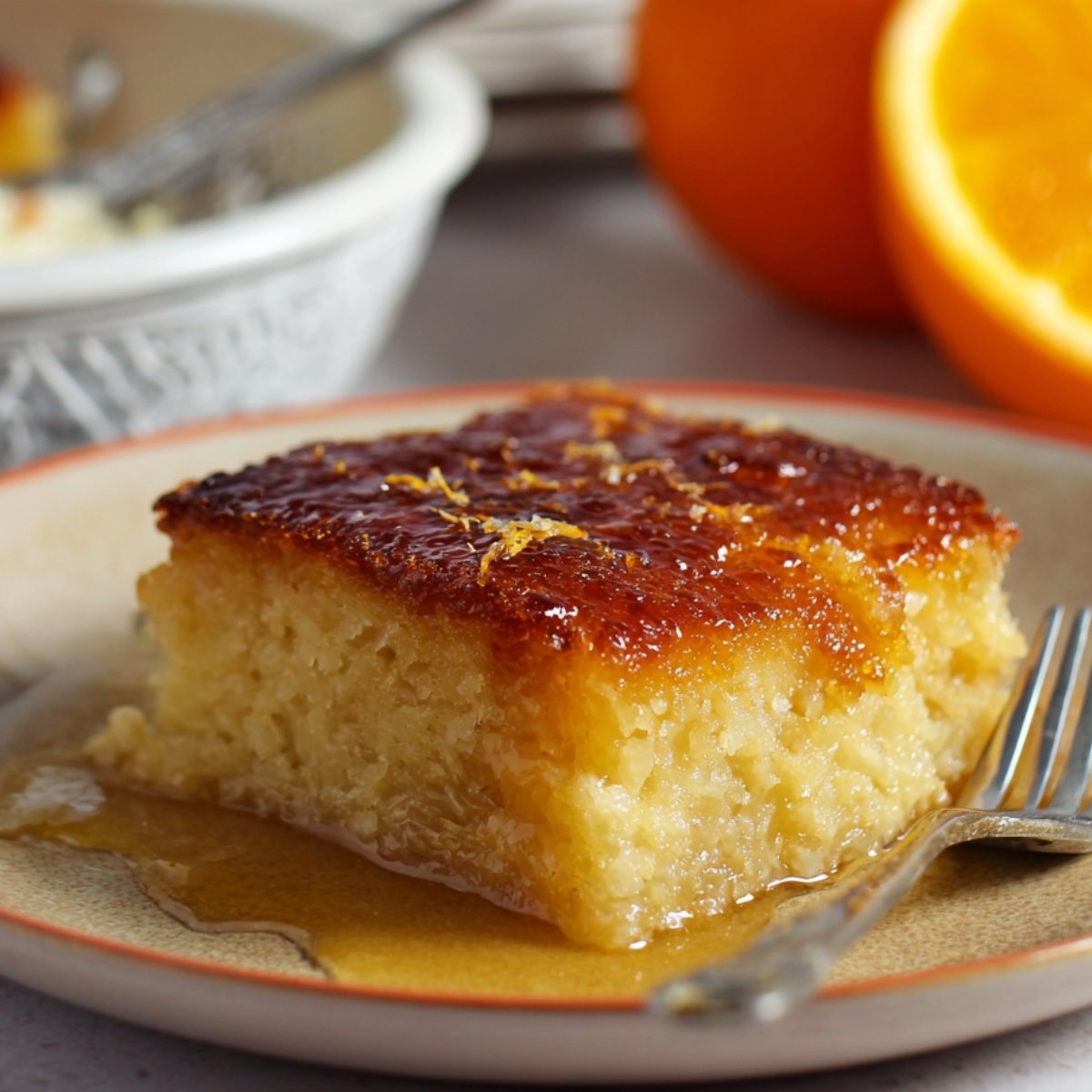
Portokalopita recipe is one of those Greek desserts that stops you in your tracks the moment it comes out of the oven. Layers of crumbled, crunchy phyllo baked into a moist orange batter, then drenched in warm citrus syrup until every bite is sticky, fragrant, and a little bit addictive. The first time I made it, my kitchen smelled like a Mediterranean bakery, and I haven't stopped making it since. It's surprisingly simple, uses ingredients you likely already have, and comes together in one single pan.
If you love Easy Greek Honey Pie or the rich, chocolatey pull of Best Chocolate Crinkle Cookies, this Greek orange cake is going to feel like a very welcome addition to your dessert rotation.
Why You'll Love This Portokalopita Recipe
This Portokalopita recipe Greek syrup cake with phyllo is the kind of dessert that earns a permanent spot in your Portokalopita recipe rotation after the very first bite.
The texture alone is worth talking about. Crispy, golden edges give way to a soft, syrup-soaked center with little pockets of chewy phyllo scattered throughout. No two bites are exactly the same, and that's honestly part of the charm.
The orange flavor is real and bright, not artificial or faint. Between the fresh zest in the batter, the orange juice in the syrup, and that whisper of cinnamon running through it all, every slice tastes like it came from a proper Greek bakery.
It's also a surprisingly easy bake. No layering, no special tools, no complicated techniques. You dry the phyllo, mix the batter, fold it together, and the oven does the rest.
And if you can manage to wait until the next day? The syrup finishes soaking overnight and the whole Portokalopita recipe deepens in flavor. It's one of those rare desserts that gets better with time instead of worse.
Whether you're making it for a dinner party, a lazy Sunday afternoon, or just because you want something a little different from your usual dessert lineup, this one delivers every single time.
Jump to:
Portokalopita recipe Ingredients
Here's a breakdown of the ingredients and the role each one plays.
See Recipe Card Below This Post For Ingredient Quantities
For the Syrup:
- Water : The base of the syrup. Combined with sugar, it creates the sweet soaking liquid that makes this cake so moist.
- Sugar : Sweetens the syrup and helps it thicken slightly as it simmers. Don't reduce this - the syrup needs enough sugar to properly soak and preserve the cake.
- Orange juice : Adds citrusy brightness to the syrup that mirrors the orange in the batter. Fresh-squeezed gives the cleanest flavor.
- Cinnamon stick: Infuses the syrup with warm, gentle spice as it simmers. Subtle but noticeable in the final result.
- Orange blossom water : A classic touch in Greek sweets. Adds a delicate floral note to the syrup. Leave it out if you don't have it - the cake is still wonderful without it.
For the Cake:
- Phyllo sheets : The heart of this dessert. Dried and crumbled phyllo creates pockets of crunch throughout the batter that stay interesting even after the syrup soaks in. This is what makes Portokalopita recipe so different from every other orange cake you've had.
- Eggs : Bind the batter and add structure. Beating them well with the sugar helps create a light base.
- Sugar : Sweetens the batter and helps the eggs beat up to that pale, slightly fluffy consistency.
- Orange zest : This is where most of the real orange flavor lives. Don't skip it. The oils in fresh zest are much more aromatic than juice alone.
- Plain Greek yogurt : Adds moisture, a slight tang, and a tender crumb. Keeps the texture rich without making the cake heavy.
- Vanilla extract: Rounds out the flavors and adds a warm undercurrent to the batter.
- Baking powder : Gives the batter a gentle lift.
- Baking soda : Works with the yogurt to create a slightly lighter, more open texture.
- Salt : Balances the sweetness and sharpens the orange flavor.
- Vegetable oil : Keeps the cake moist and tender. Oil-based cakes stay softer longer than butter-based ones, which is one reason this cake is even better on day two.
- Orange juice : Added directly to the batter for extra citrus depth throughout.
- Vegetable oil for greasing the pan: Helps the edges bake up golden and prevents sticking.
How to Make Portokalopita recipe
Follow these steps in order. The syrup needs to be completely cool before you use it, so starting with it first is key.
- Combine the ingredients: Add the water, sugar, orange juice, cinnamon stick, and orange blossom water (if using) to a small saucepan.
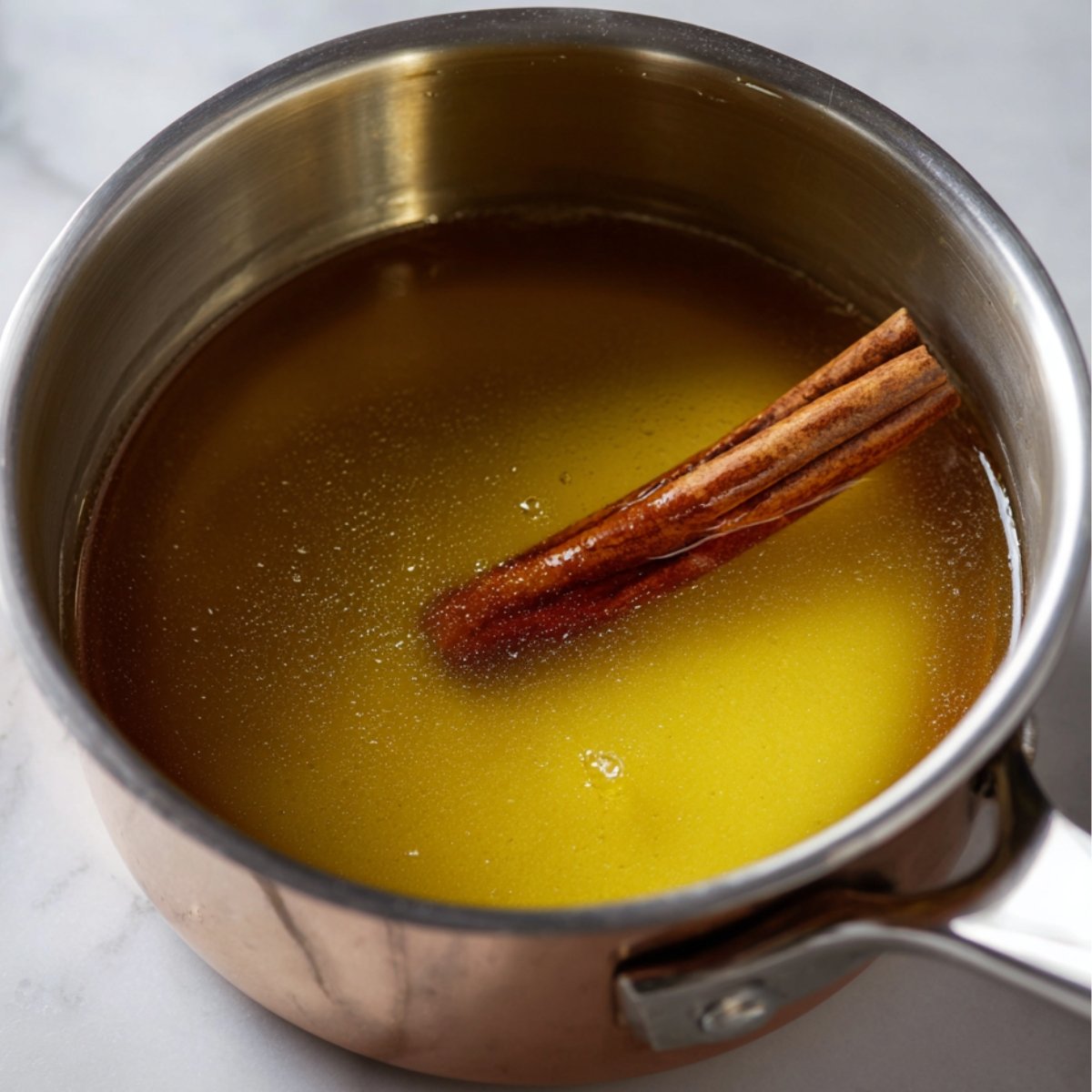
- Simmer: Bring to a boil over medium heat, then reduce to a gentle simmer. Cook uncovered for 15 minutes. The syrup will thicken slightly and the kitchen will smell amazing.
- Cool completely: Remove from heat and set aside. This is important. You want cooled syrup going onto a hot cake - not the other way around - for the best absorption.
- Preheat oven to 200°F (93°C): You're drying out the phyllo here, not browning it.
- Scrunch each sheet: Take one phyllo sheet at a time and gently scrunch it starting from the short side, like loosely crumpling a piece of paper. Place the scrunched sheets on a baking tray.
- First bake: Bake for 10 minutes, then flip each piece and bake for another 8 minutes.
- Finish drying: After baking, leave the phyllo in the oven with the door slightly ajar until it's fully dry and crisp. It should crumble easily in your hands with no soft spots.
- Crumble and set aside: Once completely cool and dry, break the sheets into small irregular pieces and set aside.
- Preheat oven to 350°F (175°C): Grease your 13x9 inch baking pan generously with vegetable oil.
- Beat eggs and sugar: In a large bowl, beat the eggs and sugar together for 3 to 4 minutes until pale yellow and slightly thickened.
- Add the remaining ingredients: Mix in the orange zest, Greek yogurt, vanilla extract, baking powder, baking soda, and salt until just combined.
- Finish the batter: Pour in the vegetable oil and orange juice. Mix until smooth and fully incorporated.
- Add gradually: Using a rubber spatula, fold the crumbled phyllo into the batter a little at a time. The batter will look chunky and uneven. That's exactly what you want.
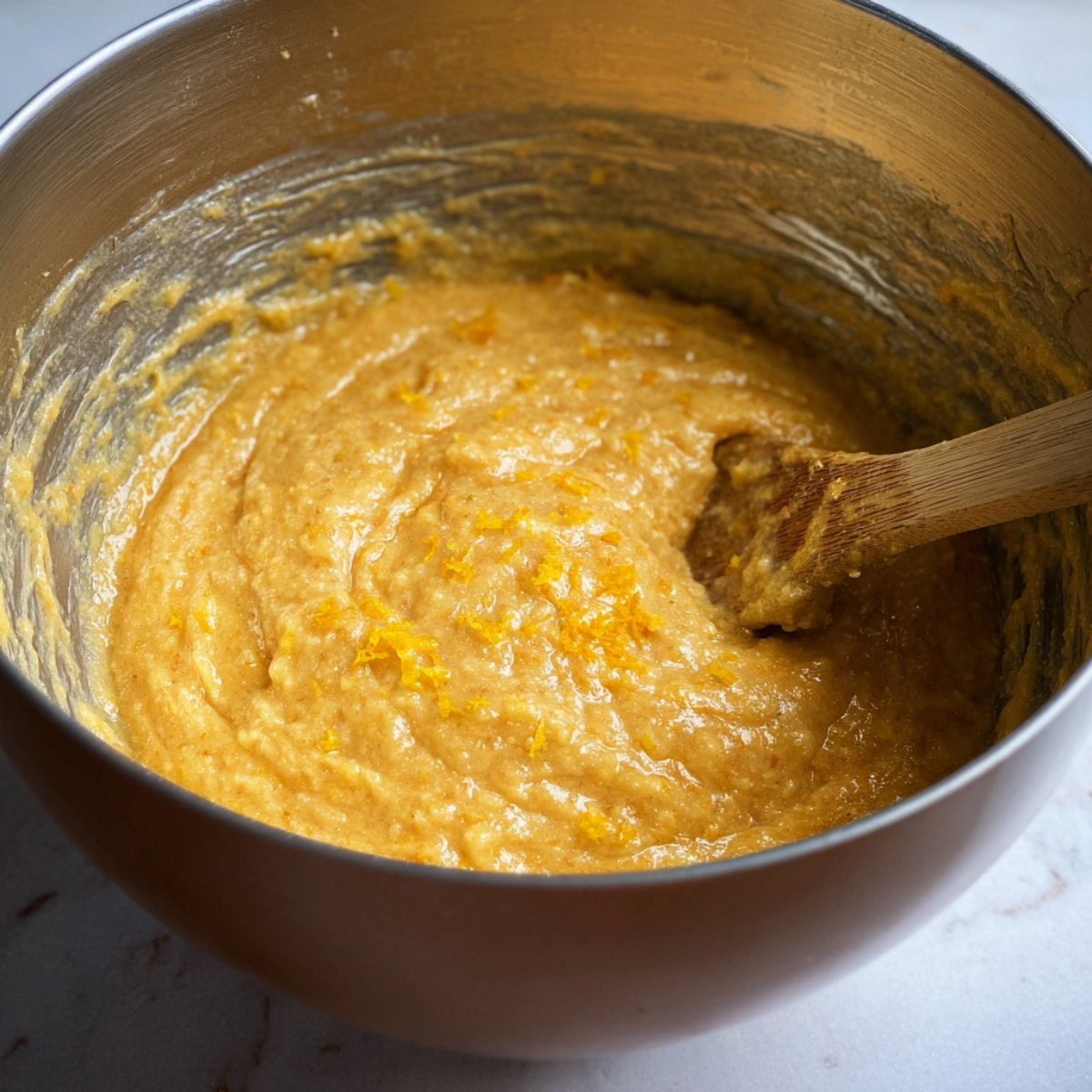
- Pour and spread: Pour the batter into the greased 13x9 inch pan and spread evenly.
- Bake: Place on the middle rack and bake for 50 to 60 minutes, until deep golden brown on top and a skewer inserted in the center comes out clean. Check at the 50-minute mark so it doesn't overbake.
- Pierce the cake: As soon as the cake comes out of the oven, use a clean skewer or fork to poke holes across the entire surface. This helps the syrup sink in evenly.
- Pour in stages: Ladle the cooled syrup over the hot cake slowly, one ladle at a time. Let each addition absorb fully before adding more. Don't rush this step. The patience pays off.
- Cool completely: Let the cake cool all the way in the pan before cutting. This gives the syrup time to finish distributing and lets the Portokalopita recipe set properly. Cutting too early means it won't hold its shape.
- Serve: Cut into squares and enjoy. A light dusting of powdered sugar or a spoonful of thick Greek yogurt on the side is a nice touch.
Easy Swaps and Substitutions
Phyllo sheets: Use standard Athens or Pepperidge Farm phyllo. Avoid thick or homestyle varieties - they won't crisp up correctly.
Vegetable oil: Sunflower oil or light olive oil both work well. Skip extra-virgin olive oil - the flavor is too strong and will overpower the orange.
Greek yogurt: Full-fat sour cream works in a pinch and gives a very similar result.
Orange blossom water: Leave it out entirely if you don't have it. The Portokalopita recipe is still delicious.
Fresh orange juice: Store-bought works but fresh makes a noticeable difference, especially in the syrup.
EQUIPMENT FOR Portokalopita recipe
13x9 inch baking pan (glass or metal both work)
Large mixing bowl or stand mixer
Rubber spatula
Small saucepan for the syrup
Baking tray (for drying the phyllo)
Clean skewer or fork (for piercing the cake)
Ladle (for adding the syrup)
How to Store This Portokalopita recipe
- Room temperature: Cover with plastic wrap or foil and store for up to 2 days.
- Refrigerator: Keep covered for up to 4 days. Let it come to room temperature before serving, or warm a slice briefly in the microwave.
- Freezer: Wrap individual slices tightly and freeze for up to 2 months. Thaw overnight in the fridge.
One thing worth knowing: this Portokalopita recipe tastes genuinely better the next day. The syrup finishes soaking overnight and the flavors deepen considerably. If you can wait, do.
Expert Tips
Don't rush the phyllo drying. If it's not fully dry and crunchy before you fold it in, the Portokalopita recipe can turn gummy in spots. Give it all the time it needs.
Cool the syrup completely. Hot syrup on a hot cake leads to uneven absorption and a soggy top. Let it cool while the Portokalopita recipe bakes.
Pierce generously. The more evenly you poke holes across the surface, the more evenly the syrup distributes.
Pour the syrup slowly. One ladle at a time. Let each addition absorb before adding more.
Let it rest before cutting. At least one hour, ideally overnight. The cake needs time to set and fully absorb the syrup.
Zest before juicing. Always zest your oranges first, then cut and juice them. Much easier and less waste.
FAQ
Why is my Portokalopita recipe not absorbing syrup?
A few things can cause this. If the syrup was still warm when you poured it on, it may have run off the surface instead of soaking in. Always use fully cooled syrup on a hot cake. Also make sure you pierced the surface well before adding the syrup, and pour one ladle at a time rather than all at once.
Is Portokalopita recipe difficult to make?
Honestly, it's one of the more approachable Greek desserts. The steps themselves are simple, and the ingredients are pantry-friendly. The process does take some time because of the phyllo drying step, but if you start the syrup first and dry the phyllo while it cools, everything flows naturally. Evelyn made it on her own the very next week and it came out beautifully.
What does filo dough do for Portokalopita recipe?
It's the whole personality of the cake. Dried and crumbled phyllo creates irregular pockets throughout the batter that bake up chewy in some spots and crunchy in others, then absorb the syrup like little sponges. Without it, you'd just have a straightforward orange yogurt cake - good, but completely different.
What are common mistakes when baking orange cake?
For portokalopita recipe specifically, the three most common issues are underdrying the phyllo (leads to gummy texture), adding the syrup while it's still hot (leads to uneven absorption), and cutting the cake before it fully cools. For orange cakes in general, using zest alongside juice makes a huge difference since most of the true orange flavor lives in the zest.
Related
Looking for other recipes like this? Try these:


Pairing
These are my favorite dishes to serve with Portokalopita recipe:

Portokalopita (Greek Orange Syrup Cake)
Ingredients
Method
- Start by preparing the syrup. Combine the water, sugar, orange juice, cinnamon stick, and orange blossom water if using. Bring the mixture to a boil, then reduce the heat and simmer uncovered for 15 minutes. Remove from heat and let cool completely.
- While the syrup is cooling, prepare the phyllo. Preheat your oven to 200°F. Open the phyllo sheets and crumple each one from the shorter side. Spread them out onto two baking sheets, ensuring they aren't scrunched too tightly. Bake for 10 minutes, then flip the sheets over and bake for an additional 8 minutes. Let the phyllo cool in the oven with the door slightly ajar. Once cooled, crumble the phyllo into small pieces and set aside.
- Preheat your oven to 350°F. In a stand mixer bowl, combine the eggs and sugar. Beat for 3-4 minutes until the mixture becomes pale yellow.
- Add the orange zest, Greek yogurt, vanilla extract, baking powder, baking soda, and salt to the mixture. Stir until just combined.
- Pour in the vegetable oil and orange juice, mixing well until the batter is smooth.
- Gradually fold in the crumbled, dried phyllo with a rubber spatula, adding small amounts at a time to prevent clumping.
- Transfer the cake batter into a greased 9x13 inch baking pan. Bake for 50-60 minutes, checking at 50 minutes, until the top turns golden brown.
- Once baked, remove the cake from the oven and immediately poke it with a skewer in several places. Slowly pour the cooled syrup over the cake, allowing it to absorb a ladle at a time. Repeat until all syrup is used.
- Let the cake cool completely before cutting to allow the syrup to fully soak in.

Leave a Reply