
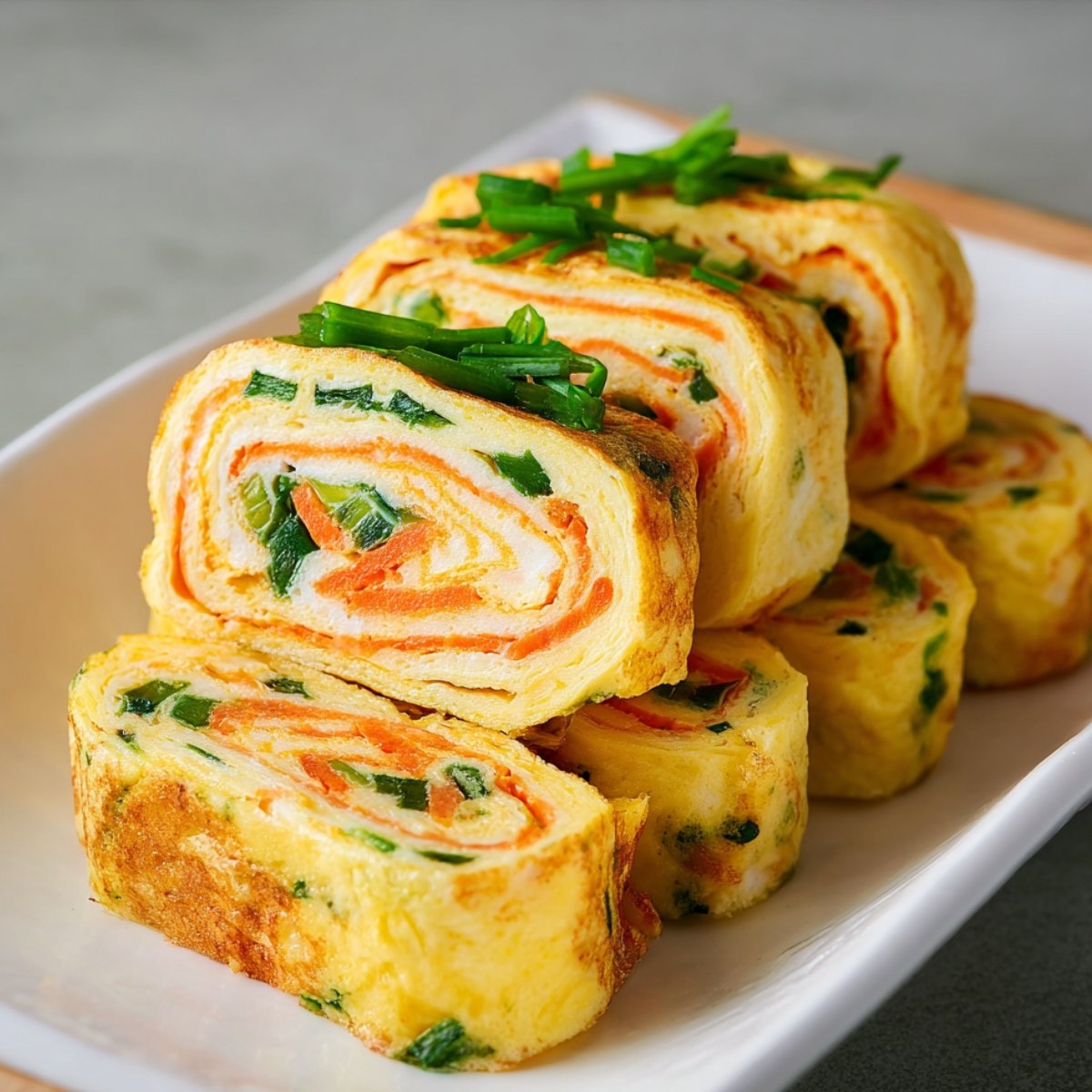
Tender, golden, and rolled into a little log of pure comfort - Korean Rolled Omelette is one of those recipes that looks fancy but comes together in just 10 minutes. Soft layers of egg wrapped around bits of sweet carrot and fresh green onion, sliced into little rounds that practically beg you to pop one straight into your mouth. I first had these at a Korean BBQ spot years ago and couldn't stop thinking about them. They paired them with a bowl of rice, and I remember thinking, "Why haven't I been making this at home?" The answer was: I had no idea how simple it actually was.
For more cozy egg ideas, check out my Easy Tomato Egg Stir-Fry, or if you're in the mood for something heartier to start your morning, my Best Banana Blueberry Waffles are always a hit. You might even serve this alongside my Easy Shakshouka Toast with Feta Fried Eggs for a full breakfast spread.
Why You'll Love This Korean Rolled Omelette Recipe
Ten minutes. One pan. Six to eight perfect little rounds of egg that look like they came from a Korean Rolled Omelette restaurant kitchen.
Gyeran Mari (Korean Rolled Omelette) is the kind of recipe that feels a little impressive but asks almost nothing of you. No special equipment, no complicated technique - just a little patience and a low flame. Once you get the rhythm of the roll down, it becomes the kind of thing you make without thinking, the way you'd throw together scrambled eggs or buttered toast.
The texture is what really gets people. Those thin, layered rolls create something soft and almost silky that a regular flat Korean Rolled Omelette just can't do. Each slice has this satisfying little cross-section of green and orange peeking through, and it tastes clean and savory and just a little sweet from the carrot. It's not fancy food, but it's really, really good food.
Jump to:
Korean Rolled Omelette Ingredients
Simple ingredients, beautiful results.
See Recipe Card Below This Post For Ingredient Quantities
- eggs: The star of the dish. Medium eggs work best here for the right balance of egg-to-vegetable ratio.
- onion, chopped: Adds a fresh, mild onion flavor and little green flecks throughout each slice.
- carrot, chopped or grated: Brings a touch of sweetness, a pop of color, and a tiny bit of texture without overpowering the egg.
- salt: Seasons the eggs properly so every bite is flavorful.
- black or white pepper: A gentle warmth in the background. White pepper is more traditional; black works just as well.
- neutral oil: Keeps the omelette from sticking and helps achieve that golden outside. Vegetable, canola, or avocado oil all work great.
how to make Korean Rolled Omelette
Follow these steps and you'll have beautiful Korean Rolled Omelette in minutes.
- Whisk the eggs: In a bowl, whisk together the 5 eggs with ¼ teaspoon salt and ⅛ teaspoon pepper until fully combined and the yolks and whites are smooth. No streaks!

- Add vegetables: Stir in the chopped carrot and green onion. Give it another quick mix so the veggies are evenly distributed throughout the egg.

- Heat the pan: Place a 10-inch non-stick pan over low heat and add 1 teaspoon of neutral oil. Let it warm up - you want the pan gently hot, not blazing. Low and slow is the whole key here.
- Cook the first layer: Pour ⅓ of the egg mixture into the pan, spreading it out evenly. Let it cook until the edges start to set but the top is still slightly wet. Gently lift the edges with your rice paddle or spatula and begin rolling from one end. Roll slowly and firmly, tucking it into a log shape as you go.
- Add the second layer: Once your first roll is complete, push it to one edge of the pan. Pour in another ⅓ of the egg mixture, tilting the pan slightly so the new egg flows underneath and around the existing roll. Let it set until the top is nearly done, then roll the whole thing - first roll and new layer together - back across the pan.
- Finish with the last layer: Push the roll to the edge again, add the remaining ⅓ of the egg mixture, and repeat. Let the egg set before rolling one final time until the whole log is cooked through and the outside is lightly golden.
- Rest and slice: Transfer the omelette roll to a clean surface and let it rest for a couple of minutes. This helps it hold its shape when you cut it. Slice into 6 to 8 rounds, trimming the tapered ends if you want neat, even pieces.
- Serve or store: Enjoy immediately while warm, or let it cool completely before storing in the fridge in an airtight container for up to 3 days.
Easy Swaps and Substitutions
No green onion? A small amount of chives or even finely minced regular onion works in a pinch. Not a carrot fan? Try finely diced red bell pepper or baby spinach for color and a slightly different flavor. Some people like adding a strip of dried seaweed (gim) before rolling for a classic Korean Rolled Omelette bento touch. A slice of cheddar or mozzarella tucked inside the roll before you start rolling is also absolutely delicious. For a richer egg flavor, you can swap one egg for two egg yolks. If you don't have a non-stick pan, make sure whatever pan you use is very well oiled to prevent sticking.
EQUIPMENT for Korean Rolled Omelette
10-inch non-stick pan
Rice paddle or spatula
Bowl and whisk
Storing and Reheating Your Korean Egg Roll
Let the Korean Rolled Omelette cool completely before storing. Wrap tightly or place in an airtight container in the refrigerator for up to 3 days. To reheat, warm gently in a pan over low heat or in the microwave for about 30 seconds. It's also great straight from the fridge, sliced and tucked into a lunchbox alongside rice and other banchan.
Expert Tips
The single biggest tip: keep the heat low. Medium or high heat makes the egg cook too fast, bubble up, and crack when you try to roll it. Low and slow gives you those smooth, pliable layers that roll without tearing. Don't rush the rolling, either - wait until the top is just barely set before you start. A rice paddle is the traditional tool and works beautifully because it's thin and flat, but a flexible silicone spatula does the job too. If your first roll isn't perfect, that's completely normal - even experienced cooks have imperfect first rolls. The second and third layers forgive a lot.
FAQ
What is Korean rolled omelette?
Gyeran Mari is a traditional Korean rolled egg dish made by layering thin sheets of seasoned egg in a pan and rolling them into a log as they cook. It's sliced into rounds and served as a side dish or in bento boxes. The name literally translates to "rolled egg."
How hard is making omurice?
Omurice is a Japanese dish (egg omelet over fried rice) and is slightly different from Gyeran Mari. Both have a learning curve with the rolling technique, but Gyeran Mari is generally considered easier since you're working with smaller amounts of egg at a time and building the roll in stages. Start on low heat and take your time - most home cooks get comfortable with it after their first or second attempt.
Is Gyeran Mari healthy to eat?
Yes, it's a nutritious choice. Each serving contains about 28 grams of protein and a solid lineup of vitamins and minerals, including Vitamin A from the carrots. Eggs are one of the most complete proteins available, and the vegetables add fiber and micronutrients. Like any dish, it's best enjoyed as part of a balanced meal.
What is a kimchi omelette called?
A kimchi omelette doesn't have one universal name, but in Korean Rolled Omelette cooking it's often just called kimchi gyeran mari when it's made in rolled form, or kimchi jeon if it's closer to a pancake style. You can absolutely add small bits of well-drained kimchi into Gyeran Mari for a tangy, spicy version.
Related
Looking for other recipes like this? Try these:



Pairing
These are my favorite dishes to serve with Korean Rolled Omelette:




Gyeran Mari (Korean Rolled Omelette)
Ingredients
Method
- Crack the eggs into a bowl and whisk well with salt and pepper until fully combined.
- Add the chopped green onion and grated carrot to the egg mixture and whisk to combine.
- Heat a 10-inch non-stick pan over low heat, then add oil. Allow the oil to warm.
- Pour ⅓ of the egg mixture into the pan, tilting it to spread evenly. As the edges start to set, gently lift them with a rice paddle or spatula, rolling the omelette gently when the top is almost set.
- Once the first roll is complete, move the omelette to the far side of the pan, then pour in the second ⅓ of the egg mixture. Tilt the pan on both sides to fill the gaps and ensure even cooking.
- Repeat the same process for the third portion of egg mixture, rolling gently to form a compact omelette.
- Let the omelette cool for a couple of minutes on a cool surface, then slice it into 6-8 pieces.
- Serve the omelette immediately or cool completely before storing in the fridge for up to 3 days.




Leave a Reply