
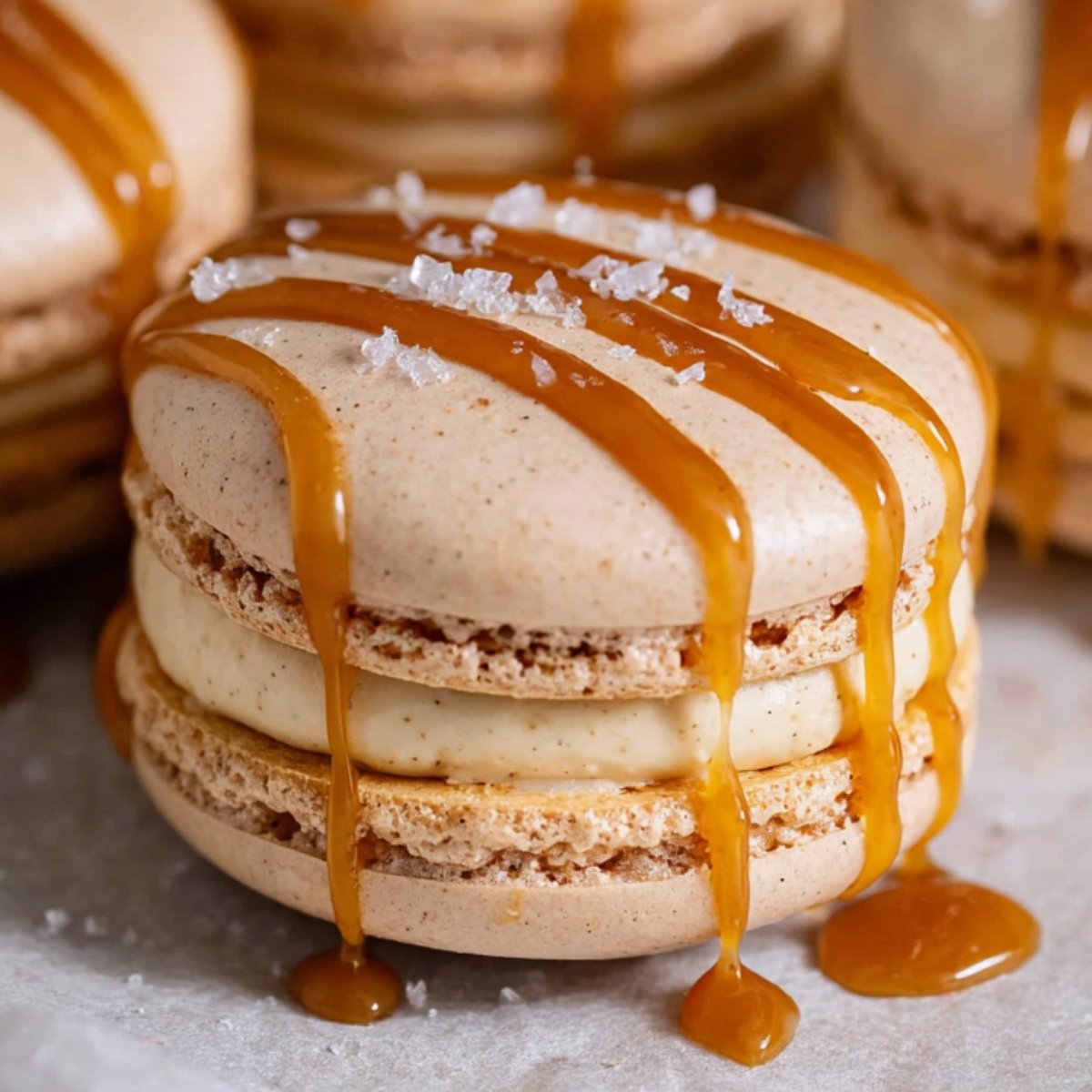
These salted caramel macarons have crisp chocolate shells, a silky caramel buttercream filling, and a little pocket of gooey salted caramel right in the center. They look like something out of a Parisian bakery window, but once you get the steps down, they're genuinely doable at home. I made my first batch after obsessing over a macaron I had at a small pastry shop, and I was honestly shocked how close I got using just simple pantry ingredients.
If you love rich chocolate desserts, you might also want to save my Easy Fudgy Brownie Cookies Recipe for later, or bookmark my Best Chocolate Strawberry Cake Recipe for your next celebration bake. And if you ever need a showstopping layer cake, my Best Red Velvet Cake Recipe never lets anyone down.
Why You'll Love These Salted Caramel Macarons
The chocolate shells have that delicate crisp exterior and chewy interior that makes a great macaron so satisfying. The caramel buttercream is rich and buttery without being overwhelmingly sweet. That little pool of caramel sauce in the center adds a gooey surprise in every bite. And the flaky sea salt on top? It's not just for looks - it makes the whole thing taste more complex and balanced. These also happen to taste even better the next day, which means you can make them ahead and they'll be at their very best when it's time to serve.
Jump to:
salted caramel macarons Ingredients
Here's everything you'll need, all in one place.
See Recipe Card Below This Post For Ingredient Quantities
For the Chocolate Macaron Shells
- Superfine almond flour : The foundation of the shells. Superfine is important - coarser flour creates bumpy tops instead of the smooth domes you're going for.
- Powdered sugar : Adds sweetness and contributes to that smooth, delicate shell texture.
- Unsweetened cocoa powder , sifted: Gives the shells a deep chocolate flavor and a beautiful dark color. Sifting is non-negotiable here.
- Aged egg whites , room temperature: Aging removes excess moisture, which helps the meringue whip up more stably. Room temperature is essential for volume - cold whites don't whip as well.
- Cream of tartar (pinch, optional): Helps stabilize the meringue. Especially helpful if you're new to macarons.
- Granulated sugar : Whipped into the egg whites to build a glossy, stiff meringue that holds its shape in the oven.
For the Caramel Buttercream Frosting
- Unsalted butter , room temperature: The heart of the filling. Room temperature butter creams up light and smooth rather than lumpy.
- Vanilla extract or vanilla bean paste : Adds warmth and rounds out the caramel flavor.
- Fine salt : Balances the sweetness and creates that signature salted caramel depth.
- Caramel sauce : Stirred directly into the buttercream for caramel flavor all the way through.
- Powdered sugar: Gives the frosting structure and sweetness. Adjust the amount based on consistency.
- Heavy whipping cream , room temperature: Loosens the frosting to a smooth, pipeable texture.
For the Salted Caramel Filling
- Caramel sauce : Spooned into the center of each macaron for a gooey, luscious surprise with every bite.
How to Make Salted Caramel Macarons
Read through the steps once before you start. salted caramel macarons have a reputation for being difficult, but if you follow these carefully, you'll be in great shape.
- Prepare dry ingredients: Sift together the almond flour, powdered sugar, and cocoa powder into a large bowl and set it aside. Sifting removes any clumps that would cause bumpy shells - don't skip this step.
- Whip egg whites: Place your aged, room-temperature egg whites into the bowl of a stand mixer with the whisk attachment. Mix on medium speed until you see small bubbles covering the surface. Add a pinch of cream of tartar if you're using it, then continue mixing until soft peaks form.
- Add sugar and build stiff peaks: With the mixer still running, slowly stream in the granulated sugar. Mix on medium speed for 30 seconds, then increase to medium-high. Keep mixing until you have stiff, glossy peaks that hold their shape firmly when you lift the whisk.
- Fold in dry ingredients: Add the sifted dry ingredients to the meringue and fold using a circular motion, scraping against the sides of the bowl. Keep folding until the batter flows off the spatula in a thick, steady ribbon. You should be able to draw a figure 8 without the ribbon breaking. This is the most critical step - stop as soon as you reach that consistency.
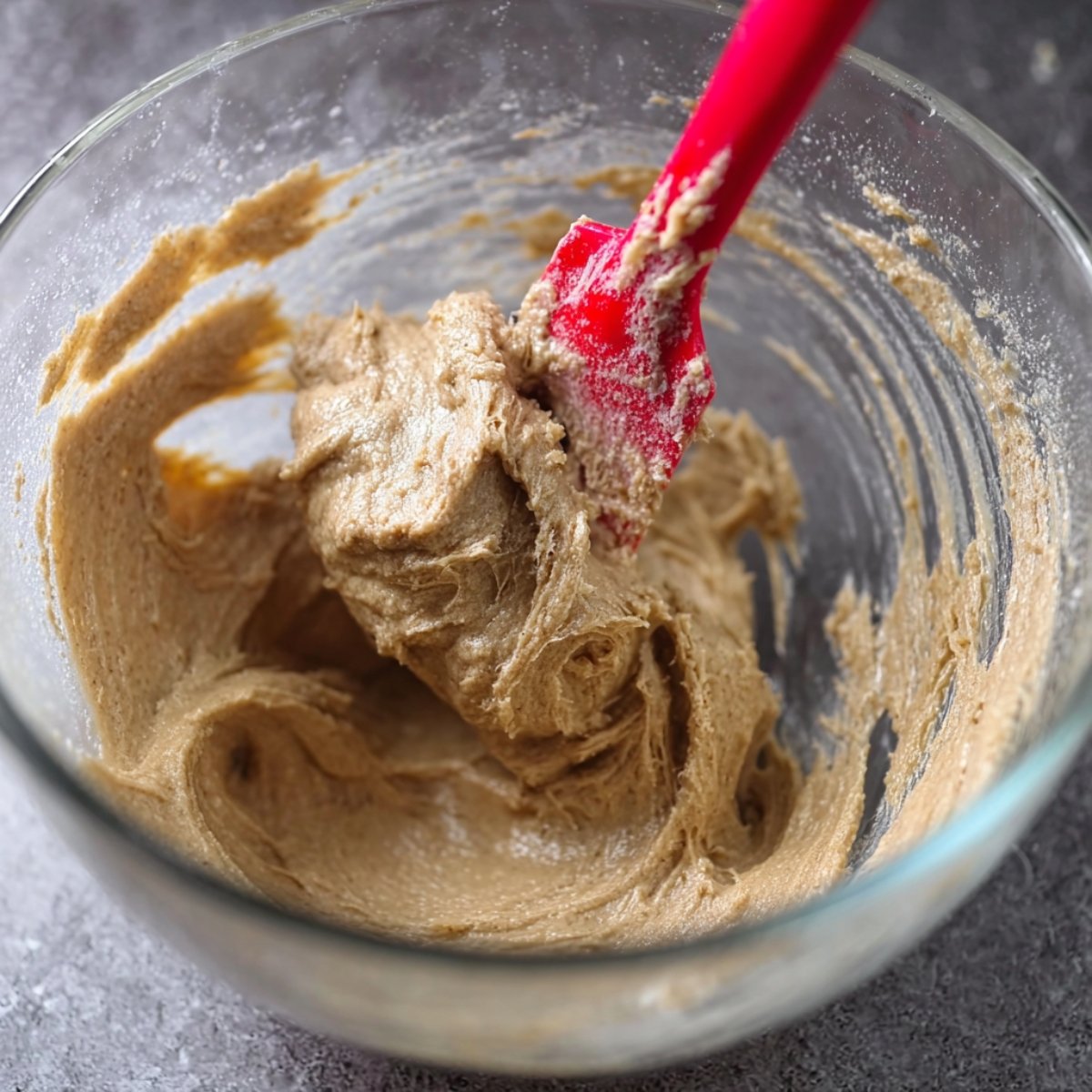
- Pipe the shells: Transfer batter into a piping bag fitted with a medium round tip. Pipe 1 and ¼-inch rounds onto your silicone macaron mat or parchment-lined baking sheets, keeping them spaced about 1 inch apart.
- Release air bubbles: Firmly tap the baking trays flat on the counter several times to pop any air trapped inside. Use a toothpick to pop any visible bubbles on the surface of the piped rounds.
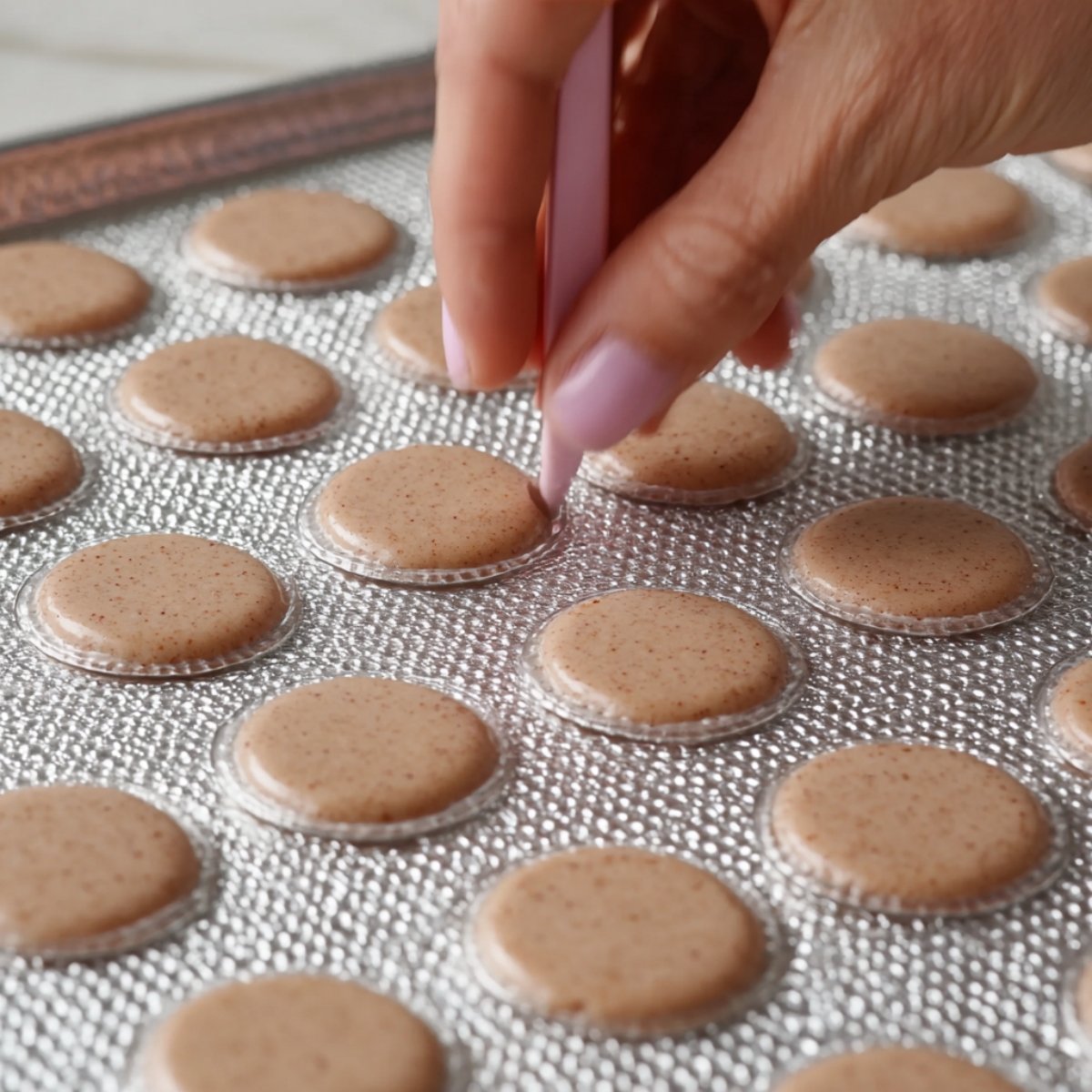
- Rest the macarons: Let the piped macarons sit at room temperature for 30 minutes to form a dry skin. They're ready when you can lightly touch the surface without any batter sticking to your fingertip. The tops should look matte, not shiny.
- Preheat the oven: While the macarons rest, preheat your oven to 315 degrees F (157 degrees C). Give it plenty of time - oven accuracy really matters here.
- Bake: Bake one tray at a time on the middle rack for 15 to 18 minutes, rotating the pan halfway through. The shells are done when they've developed feet (those ruffled edges at the base) and don't wobble when you gently nudge them. Cool completely on the tray for 15 minutes before carefully peeling them off the mat.
- Beat the butter: Beat room-temperature butter in your stand mixer on medium speed for 1 to 2 minutes until it lightens in color and looks fluffy and smooth.
- Add the flavor: Add vanilla extract, fine salt, and caramel sauce. Mix on low speed until just combined.
- Incorporate sugar and cream: Gradually add the powdered sugar and heavy cream, mixing on low speed until fully incorporated. If the frosting is too thick, add a little more cream one teaspoon at a time. Too thin, add powdered sugar one tablespoon at a time.
- Transfer to piping bag: Spoon the finished frosting into a piping bag fitted with a small French tip.
Substitutions and Easy Swaps
Almond flour: If you can't find superfine, process regular almond flour in a food processor and sift it very thoroughly. Don't substitute other nut flours without testing.
Cocoa powder: Regular unsweetened works well. Dutch-process gives a deeper color and slightly less acidic flavor.
Caramel sauce: Store-bought works perfectly here. salted caramel macarons sauce from the store actually adds even more depth.
Heavy cream: Half-and-half can work in the buttercream in a pinch, though the texture will be slightly lighter.
Vanilla extract: Vanilla bean paste gives a more intense flavor with pretty little flecks throughout the buttercream.
Flaky sea salt: Fleur de sel or Maldon are both excellent choices. Don't skip this - it's what ties the whole salted caramel macarons flavor together.
EQUIPMENT FOR salted caramel macarons
Stand mixer with whisk attachment: Essential for whipping the meringue properly. A hand mixer can work but takes more time and effort.
Piping bags with tips: One medium round tip for the shells, one small French tip for the buttercream.
Macaron mat or parchment paper: A silicone mat with pre-marked circles makes piping consistent sizes so much easier.
Toothpick: For popping air bubbles after piping.
Heavy baking tray and silpat: A sturdy, thick baking sheet distributes heat evenly so shells don't crack or over-brown.
Fine mesh sifter: Non-negotiable for the dry ingredients. Lumpy almond flour equals lumpy shells.
How to Store Salted Caramel Macarons
Store assembled salted caramel macarons in an airtight container in the refrigerator for up to 5 days. They actually taste better on day 2 or 3 once the shells have had time to absorb moisture from the filling and soften slightly.
You can freeze unassembled salted caramel macarons in an airtight container for up to 3 months. Let them come to room temperature before filling. The salted caramel macarons buttercream keeps in the fridge for up to a week - just re-whip it briefly before using.
Expert Tips
Age your egg whites: Separate your eggs 24 to 48 hours ahead and leave the whites uncovered in the fridge. This removes excess moisture and creates a more stable meringue.
Sift everything twice: Even if the almond flour looks smooth, sift it. Any coarse bits show up as bumps on the finished shells.
Nail the macaronage: The folding step is where most batches go wrong - too stiff and the shells crack, too loose and they spread flat. Fold until the batter flows like slow lava and passes the figure-8 test.
Tap the trays firmly: Don't tap gently. Give the trays a hard, flat bang on the counter to bring trapped air bubbles up to the surface.
Know your oven: Every oven runs a little different. If shells crack, it's running hot. If they don't develop feet, it may run cool. Adjust by 5 to 10 degrees and try again.
Rotate mid-bake: Rotating the tray halfway through ensures even heat distribution so one side doesn't brown before the other.
Cool completely before peeling: Rushing this step tears the shells. The full 15 minutes of cooling on the tray is worth every second.
FAQ
What is the secret to good salted caramel macarons ?
The biggest secrets are aged egg whites, properly sifted dry ingredients, and nailing the macaronage folding technique. Don't rush the resting step before baking either - that dry skin is what creates the signature feet. And always bake one tray at a time for consistent results. A family tip: make them the day before you need them. They're always better on day two.
How do you make the perfect salted caramel?
Great salted caramel macarons comes down to patience at the stove. Cook your sugar until it reaches a deep amber color before adding cream - don't rush it or you'll end up with something pale and one-dimensional. Real butter and a generous pinch of sea salt finish it off. That said, a good store-bought caramel sauce is a perfectly solid shortcut for this recipe, and nobody will know the difference.
What is the most popular macaron flavor?
Salted caramel and classic vanilla are consistently the top sellers at bakeries. Raspberry and pistachio are also perennial favorites. salted caramel macarons has a particular pull because the sweet-and-salty contrast is genuinely hard to resist, and it makes the macaron feel more complex and grown-up than something straightforwardly sweet.
Which is better, salted caramel macarons or caramel?
Salted caramel, and it's not a close call. The salt doesn't make it salty - it amplifies the caramel's natural sweetness and adds a complexity that plain caramel just doesn't have. It also cuts through the richness in desserts like these salted caramel macarons, which makes each bite feel lighter and more balanced. Once you've had salted caramel macarons, plain caramel always feels like it's missing something.
Related
Looking for other recipes like this? Try these:

Pairing
These are my favorite dishes to serve with salted caramel macarons:

Salted Caramel Macarons
Ingredients
Method
- Sift the almond flour, powdered sugar, and cocoa powder into a large bowl and set aside.
- Pour the aged egg whites into a stand mixer bowl and whisk on medium speed until small bubbles appear on the surface. Add a pinch of cream of tartar (optional) and continue mixing until soft peaks form.
- Gradually add the granulated sugar and whisk on medium speed for 30 seconds. Then increase speed to medium-high and whisk until stiff, glossy peaks form.
- Gently fold the sifted dry ingredients into the meringue using a circular motion until a thick ribbon of batter runs off the spatula. Use the figure-8 test to check consistency: the batter should flow in a consistent stream and form a figure 8.
- Transfer the macaron batter into a piping bag fitted with a medium-sized round piping tip. Pipe 1 ¼-inch rounds onto prepared baking sheets, spacing them 1 inch apart.
- Bang the pans firmly on the counter a few times to release air bubbles. Pop any remaining air bubbles with a toothpick.
- Let the macarons rest at room temperature for 30 minutes, until they develop a matte skin.
- Preheat the oven to 315°F (160°C). Bake one tray of macarons at a time on the middle rack for 15-18 minutes, rotating the pan halfway through.
- Remove the macarons from the oven and allow them to cool on the pan for about 15 minutes. Then gently remove them from the baking mat or parchment paper.
- For the caramel buttercream frosting, beat the room-temperature butter with a whisk attachment on medium speed for 1-2 minutes until smooth and lighter in color.
- Add the vanilla extract, salt, and salted caramel sauce, mixing on low speed.
- Slowly add the powdered sugar and heavy cream on low speed, continuing to mix for a couple of minutes until the desired frosting consistency is reached. If too thick, add more cream (1 teaspoon at a time); if too thin, add more powdered sugar (1 tablespoon at a time).
- Transfer the frosting into a piping bag fitted with a small French tip.
- Pipe a thick ring of caramel buttercream around one macaron shell, leaving the center open. Fill the center with salted caramel sauce. Gently press a second shell on top to form a sandwich.
- Optional: Drizzle with warm caramel sauce and sprinkle flaky sea salt on top.
- Place the assembled macarons in an airtight container and refrigerate overnight. Let them come to room temperature before serving.
Leave a Reply